
The UK events industry is undergoing a transformation, driven by technological advancements, sustainability imperatives, and shifting audience expectations. As we move through 2025, event organisers, suppliers, and venues must adapt to new trends to remain competitive in a rapidly evolving landscape.
1. The Rise of Hybrid and Immersive Experiences
While in-person events have made a strong comeback, the demand for hybrid experiences remains high. Attendees now expect digital enhancements, such as virtual networking, interactive content, and on-demand access to sessions. The integration of augmented reality (AR) and virtual reality (VR) will further redefine engagement, offering immersive product showcases, virtual venue tours, and gamified brand activations.
2. Sustainability and Eco-Conscious Events
With increasing environmental regulations and consumer awareness, sustainability is a key focus for the events industry in 2025. Venues and suppliers are prioritising carbon-neutral events by reducing waste, opting for sustainable materials, and incorporating energy-efficient technologies. Clients are seeking greener staging solutions, recyclable exhibition stands, and digital alternatives to printed materials.
3. AI and Automation in Event Planning
Artificial intelligence (AI) is streamlining event management, from personalised attendee experiences to smart scheduling and data-driven marketing. AI-powered chatbots handle event queries, while machine learning algorithms optimise ad campaigns, improving ROI for event organisers. Trinity Set and Stage Limited and other staging companies are increasingly using automation in set design and build processes, ensuring faster, more cost-effective solutions.
4. The Growth of Experiential Marketing and Brand Activations
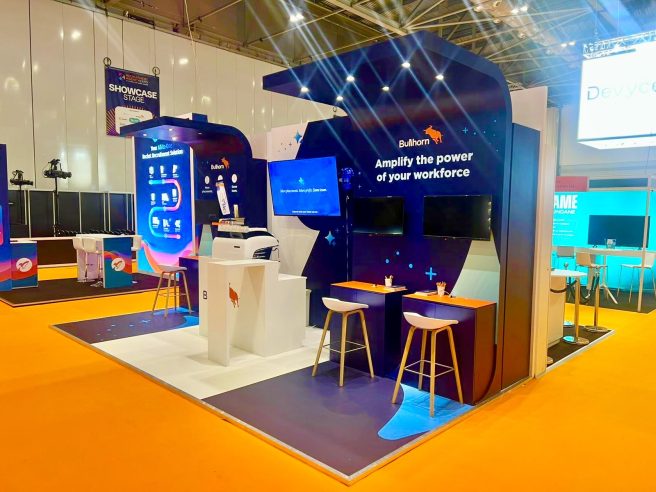
Brands are investing heavily in experiential marketing to create memorable, shareable moments. From interactive product launches to pop-up experiences, audiences crave hands-on engagement. Custom-built stages and bespoke brand activations are becoming the norm, with companies looking to create Instagrammable and immersive environments that leave a lasting impression.
5. Evolving Safety and Compliance Measures
Post-pandemic event safety protocols continue to evolve. Venues are investing in contactless technology, AI-driven crowd management, and enhanced security measures. Compliance with updated health and safety standards is crucial, with event organisers focusing on seamless entry systems and real-time occupancy tracking.
6. The Demand for Flexible Event Spaces
The rise of hybrid working has influenced the demand for flexible event spaces. Traditional conference centres are adapting by offering modular staging solutions and multi-purpose venues that can host both physical and virtual audiences. Pop-up spaces and unique locations—such as rooftop venues, warehouses, and immersive environments—are gaining popularity.
Looking Ahead
The UK events industry in 2025 is defined by adaptability, creativity, and technological integration. Companies that embrace sustainability, AI-driven efficiencies, and innovative staging solutions will thrive in a competitive market. As brands seek to create impactful experiences, event professionals must continue to evolve, ensuring that every production is more engaging, immersive, and forward-thinking than the last.


